
001-002-00000
care@solaceandmore.com
woodvale Street 2
Nairobi westland
8:00am - 5:00pm
Monday-Friday
Can a Funeral Be a Protest? When Grief Turns into a Movement

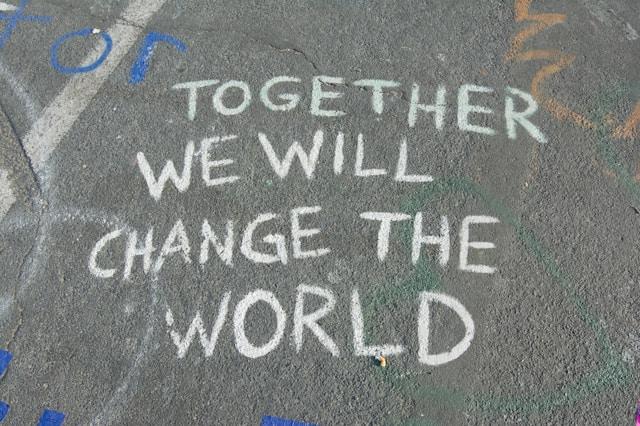
A protest funeral is less of a goodbye and more of a reckoning.
At its core, it is a public memorial where the act of mourning becomes politically charged, socially visible and intentionally disruptive. It’s when a coffin isn’t just a vessel for the dead, but a symbol of the injustice that claimed them. It’s when tears call for change.
These funerals aren’t always about rage. Sometimes they are quiet, dignified refusals to let injustice bury the truth. Other times, they are loud declarations that grief cannot - and will not - be separated from justice. It could be a family demanding answers, a community marching beside a hearse, or an artist painting banners soaked in sorrow, one thing for sure is that protest funerals are where mourning meets meaning.
These protests can be planned or spontaneous, intimate or massive. Whatever the case, the unifying factor is intention. Intentional about letting the world know that This death and grief matters.
In this context, a symbolic funeral or protest memorial may even occur without a body, especially when the dead have disappeared, been denied burial, or represent a broader cause. These rituals are less about closure and more about collective confrontation.
Throughout history, there have been moments when the dead refused to be buried quietly. Their funerals - whether symbolic or physical - became flashpoints. Mourning turned into movements and Sorrow into strategy.
Here are some powerful examples where funerals became global cries for justice:
George Floyd (USA, 2020)
One of the most famous protest funerals ever witnessed, Floyd's memorial was not just for one man, it was a wake-up call for the world. As his golden casket was carried through a sea of mourners, cities around the globe erupted in protest. Floyd’s funeral ignited the largest civil rights movement in decades, uniting millions under the banner of Black Lives Matter.
🇰🇪 The Youth of Kenya’s 2024 Protests
When young Kenyans took to the streets to oppose the Finance Bill, they never imagined their resistance would end in bloodshed. But after the deaths of protesters like Rex Masai, their funerals became mass gatherings of mourning and mobilization. White ribbons, protest chants and powerful silence marked these ceremonies. The fallen were remembered not just as victims, but as heroes - as symbols of a generation that refused to stay silent. Their deaths lit a fire in the nation’s conscience, sparking a renewed call for justice, accountability and youth-led reform.
🇰🇪 Dedan Kimathi – A Funeral Delayed, Yet Defiant
Decades after his execution by British colonial forces, freedom fighter Dedan Kimathi was never officially buried. The absence of a grave became a haunting protest in itself. To date no one knows where his body was buried, a fact that saddens the nation. His symbolic burials, speeches and reenactments remind Kenya that unfinished justice is a wound that echoes across generations.
💔 Marielle Franco (Brazil, 2018)
An Afro-Brazilian councilwoman and human rights defender assassinated in Rio de Janeiro together with her driver, Anderson Gomes - Marielle’s funeral erupted into protests demanding answers. Her memorial became a feminist, anti-racist rallying cry against state-sanctioned violence in Brazil’s favelas.
Desmond Tutu (South Africa, 2021)
Born Desmond Mpilo Tutu, this South African Anglican bishop and theologian was known for his work as an anti-apartheid and human rights activist. He was the first Black African to hold the position of both Bishop of Johannesburg from 1985 to 1986 and then Archbishop of Cape Town from 1986 to 1996, an iconic feat by any standard.
While not a traditional protest funeral, Tutu’s farewell was rich in political symbolism. He had requested a simple pine coffin and an eco-friendly burial - final acts of humility and silent protest against inequality and excess. His memorials stirred conversations about justice, climate and legacy.
All these stories remind us that when injustice kills, the funeral often speaks louder than the eulogy.
What turns a funeral into a frontline? Why does a community decide that the graveside is not the end but the beginning?
Unjust Death
When someone dies at the hands of power through a bullet, a baton, or brutal neglect, the funeral becomes a public charge sheet. Tongues start wagging and names get named. It tells the truth. Whether it’s police brutality in Kenya, political assassinations in Brazil, or state-sanctioned violence in Myanmar, the burial becomes an indictment.
Systemic Silencing
Often, these funerals erupt because grief has been denied space. It starts with random acts like the media blurring facts or the government denying responsibility. Then Society moves on too quickly. In that void, the funeral becomes a microphone for the unheard.
Communal Rage
At what point does grief stop being private and starts becoming political? When does an individual's pain become the neighborhood’s pain? Sometimes the events are spontaneous as the street gathers and the hashtags fly. People wear black not just for mourning but for unity.
Cultural Memory & Story-Holding
In many cultures across the world, funerals aren’t just a farewell but a storytelling ceremony. To protest during a funeral is not to dishonor the dead but to honor the fullness of their story, especially if it was violently cut short.
These are not “political stunts.” They are public rituals of resistance. A way for communities to reclaim control over the story of the fallen and send a message to the living that “This must never happen again.”
Once grief takes to the streets it becomes more than just a casket. it now carries a message. That casket becomes a symbol that unifies a shared voice. Protest funerals, while shaped by deep sorrow, are deliberately crafted acts of resistance.
Here are the defining elements that turn a funeral into a public call for justice:
Public Procession
The streets become the aisle as mourners march together to be seen and heard. The procession could be passing through a major city or a rural town; regardless, the path taken becomes a symbol of reclaiming space especially when it passes courts, parliaments, or police stations.
Chants, Placards, and Symbols
One common factor with Funeral protests is the presence of protest language chants for justice, banners bearing names and last words and shirts printed with faces of the fallen.
Calls to Action
These funerals don’t end at the burial, ending instead with speeches, statements or demands. Family members, community leaders and fellow activists use the moment to galvanize change. Look at it as mourning with a manifesto.
Artistic Expression
From spoken word to silence, protest funerals often include elements of art as resistance. Songs that pierce the heart and drum beats that sync with the march. Poems read through tears. Even the silence says what words cannot.
Media Presence
These funerals are often covered live, with The cameras being a huge part of the strategy. They document injustice, dignity and collective pain. Protesters know that if the world doesn’t see, it might forget and that to see is to believe.
Disruption of Space
A protest funeral usually reclaims public space as roads are closed and in some instances parliament gates getting blocked. A plaza is quickly turned into a prayer ground. In some occasions simply refusing to bury becomes its own act of protest as seen in symbolic funerals or when communities hold vigils for weeks.
A protest funeral doesn’t end at the graveside. If anything, that’s often where the real work begins.
When communities gather in grief and defiance campaigns are born, leaders emerge and systems shake.
So what happens when a memorial becomes more than a moment?
Justice Campaigns
After George Floyd was laid to rest, his name lived on, etched into petitions, policy debates and protest chants. The call for police reform reached global capitals. In Kenya, the youth-led protests following the 2024 killings evolved into digital campaigns, legal action and calls for independent investigations.
Policy and Legal Reform
Funeral protests often fuel tangible change. Floyd’s death led to the introduction of the George Floyd Justice in Policing Act in the U.S while In Kenya, demands for accountability over protester killings have sparked nationwide conversations around police brutality, youth representation and civil liberties.
Artistic and Cultural Movements
The imagery born from protest funerals like white coffins, graffiti memorial and spoken word tributes, often sparks artistic revolutions. Music, murals, plays and documentaries keep the memory burning and the message alive.
Generational Change
Sometimes, the funeral becomes a rallying point for a new generation of changemakers. In Brazil, Marielle Franco’s death brought more Black, queer, and feminist leaders into politics. In South Africa, Desmond Tutu’s final protest - his minimalist funeral - stirred Gen Z conversations about climate, corruption and humility in leadership.
When handled with care, protest funerals can rewrite history - not just in textbooks but in minds, laws and lives. They are the emotional epicenters of revolutions we can’t ignore.
A recurring question, but one that holds so much weight. It’s the question that always surfaces sometimes in whispers, other times not so subtly:
“Isn’t it disrespectful to turn a funeral into a protest?”
Some argue that it exploits grief, that it is disrespectful to politicize a sacred moment. That it turns mourning into a media stunt.
But the painful truth is that protest funerals are not acts of disrespect but rather acts of deep love, cultural power and unflinching truth.
Mourning in Many Cultures Is Performative
Grief is not quiet - has never been. Grief wails and dances and sings through the night. Funerals are public. They involve entire villages, neighborhoods or even congregations. To mourn is to gather, to testify, to resist forgetting. Protest, then, is not a disruption but a continuation of that communal mourning.
Protest as Dignity
When someone dies unjustly and the system stays silent, the family is often left with visibility.to be seen is to be heard and a protest funeral is a way to protect the dignity of the dead and demand a future for the living.
When Silence Is More Disrespectful
What is more disrespectful? A funeral that demands justice or a quiet burial followed by another, and another, and another...?
In Kenya, families of slain protesters in 2024 refused to be hushed. Their grief was raw. But so was their resolve. In marching, singing and calling out names, they honored their dead by vowing not to allow the same be repeated in future generations.
“To grieve is to speak. To protest is to shout. Sometimes a funeral must do both.”
Some protest funerals roar while some whisper.
In the face of surveillance communities have found subtler, solemn ways to resist. These are the quiet protests; the ones that speak in symbols, in absence and in stillness.
Not to be confused as being less powerful, they include
⚪ White Coffins
In multiple countries, white coffins have become a heartbreaking symbol of innocence lost, often used when children are victims of state or gang violence. The color alone becomes a silent scream. In Kenya, small white coffins carried through town squares in 2024 spoke volumes without having to utter a single chant.
🩶 Mourning Clothes and Ribbons
Across cultures people have used black armbands, white ribbons or traditional mourning shrouds as quiet signs of collective grief and dissent. These wearable symbols turn every person into a living memorial. In Myanmar, black ribbons worn by healthcare workers were a quiet protest against military brutality.
Empty Shoes
Rows of shoes - neatly lined, never worn - have been used in symbolic funerals for the disappeared or massacred. They represent lives taken and justice denied with the absence of bodies making the statement even more haunting.
Symbolic Burials
Even with the absence of a body to bury in some cases, communities still gather. They build a coffin and name the lost - laying memory to rest. Symbolic funerals for genocide victims, drowned refugees and political prisoners are some of the grief rituals turned into ghostly, global demands for truth.
Silence doesn’t mean surrender. In protest funerals, quiet can be sharper than a scream.
On this page
- When Grief Marches Into the Streets
- What Is a Protest Funeral?
- A History Written in Tears: Global Examples of Funeral Protests
- Why Funerals Become Protests
- The Anatomy of a Protest Funeral
- When Memorials Become Movements
- Is It Disrespectful to Protest Through Death?
- When It Happens Quietly: Silent Protest Funerals
- Grief as a Tool for Justice
- Mourning That Refuses to Be Quiet


.jpg&w=1080&q=75)

.jpg&w=1080&q=75)



Solace & more Newsletter
Losing someone you love changes everything. In the midst of grief, it's easy to forget to care for your own well-being. That's why we've put together a few simple, nourishing recipes—to support your body while your heart heals. Join our weekly grief care newsletter for comforting recipes, gentle guidance, and reminders that healing takes time — and you don't have to go through it alone
You may also like
Coffin vs Casket: Price Comparison, Photos & Which to Choose
Confused about coffins vs. caskets? Get clarity on designs, costs (from $400 to $15,000+), and cultural traditions. Learn how to choose respectfully and avoid funeral home upsells. Trusted by families worldwide.
Read More
Grieving and Feeling Alone? These Apps Offer Real Support
Apps that give you comfort during your grieving period
Read More
Can a Funeral Be a Protest? When Grief Turns into a Movement
Signs of defiance on a brick wall: ‘Justice 4 All’ and ‘I Want to Be Heard’—silent protests turned into loud demands for dignity and change.
Read More
How to Plan a Meaningful Funeral for Your Child
Practical guidance for planning a child's funeral after stillbirth, infant loss, or the death of an older child. Includes burial vs. cremation advice, cost considerations, and global support resources.
Read More
Why Pre Loss Planning Matters More Than You Think
Pre-Loss Planning: A Loving Guide to Saying Goodbye with Clarity
Read More
How to write the perfect obituary, according to funeral industry professionals
Why do some obituaries capture the heart? There’s nothing quite so moving as an obituary that truly captures and honours the spirit of the deceased.
Read More
GoGetFunding: A Crowdfunding Company Built for Creators, Claimed by Grief
How GoGetFunding Became the World's Most Trusted Funeral Fundraising Platform
Read More
Grieving After a State Execution: What Families Face and Where to Find Help
Learn how families can cope, honor their loved ones, and find healing in the face of death penalty grief.
Read More
What to Write in a Condolence Book: 30+ Examples & Complete Etiquette Guide
If grief had a guestbook, this is how you sign it.
Read More
Client-Facing & Ceremonial Jobs in the Funeral Service Industry
Death is a part of life, and the careers around it are more varied than you think. From Funeral Directors to Celebrants to guiding families in crisis to creating personalised ceremonies
Read More
Technical & Preparation Specialists in the Funeral Service Industry
Behind every goodbye are professionals most people never meet. From embalmers and thanatopracteurs to cremation and composting technicians, these roles blend science, art, and empathy to prepare loved ones for farewell.
Read More
A Three-Step Guide to Sorting a Deceased Loved One's Personal Belongings
Explore ways to honor a loved one through the things they left behind.
Read More
Do Banks Automatically Know When Someone Dies? Here’s the Truth
How do banks know that their client has died?
Read More
How to Choose a Keepsake That Honours Both Grief and Love
Ideas for gifts after loss
Read More
How to Choose a Grief Counselor: Steps, Questions & Support Options
Choosing the right grief counselor isn’t just about credentials. Here’s how to make the choice with clarity and confidence.
Read More
What Happens to Us When a Father Dies? The Psychology of Parental Loss
Dealing with loss of a father and when to reach out for support
Read More
Understanding Suicidal Ideation
Learn the difference between passive and active suicidal thoughts, how common they are worldwide, and why early support matters.
Read More
Grieving A Baby the World Never Met - Understanding Miscarriage.
Miscarriage is a devastating loss, not a personal failure
Read More
What Is Swedish Death Cleaning? Explained
Because one day, someone else will open your drawers.
Read More
Talking About Money When Someone Dies: A Faith-Based Perspective
Why are money conversations still taboo in faith spaces, especially when someone is dying?
Read More
Your email is safe with us, we do not spam! Unsubscribe at any time.